

Nail Technician Courses
Nail Technician Courses online. A nail technician is a professional who specialises in the care and beautification of nails. They provide a range of services including manicures, pedicures, nail art, and sometimes treatments for nail health.
Nail technicians work with tools like nail clippers, files, buffers, and various polishes to shape, decorate, and improve the appearance of nails. They may also use acrylics, gels, and other materials for enhancements, like extensions or designs. The role often involves working in beauty salons, spas, or nail bars, and they may also educate clients about nail care.
It’s boom time for the Beauty Industry and in particular qualified Nail Technicians. By completing one of our Nail Technician Courses online you could be qualified and insured with a matter of days. The more you log in the quicker you complete!
You are able to focus on a particular nail type if required including Gel Nail Extensions, Acrylic Nails or BIAB. The choice is yours!
All of our Nail Technician courses online, can be done at your own pace. If you want to crash the course out and qualify quickly, then you can. If you wish to log in occasionally and take your time, then that’s totally up to you. You decide!
Showing all 7 results
-
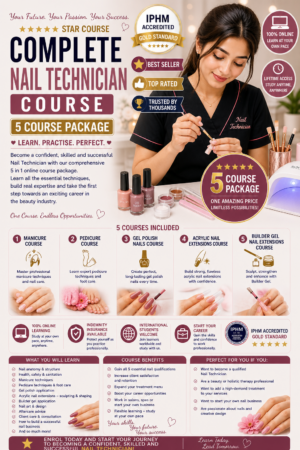
Complete Nail Technician Course – IPHM Accredited
From £519.00This online complete nail technician course offers students an opportunity to develop the skills required to set up as a...View Course Details This product has multiple variants. The options may be chosen on the product page -
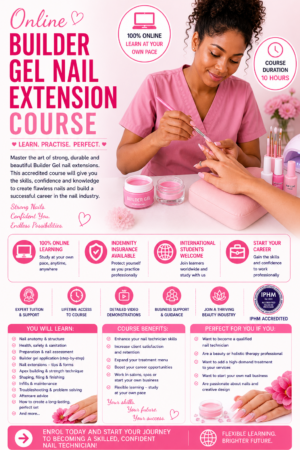
Builder Gel Nail Extensions Online Course – IPHM Accredited
£129.00Online Builder Gel Nail Extensions course is a type of nail enhancement or extension technique used in the beauty and...Add to basket -
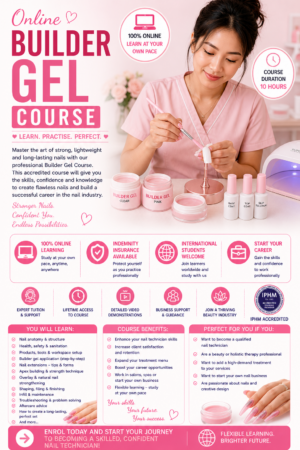
Builder Gel Nails Online Course – IPHM Accredited
From £129.00Online Builder Gel (BIAB) nails course is a type of nail enhancement or extension technique used in the beauty and...View Course Details This product has multiple variants. The options may be chosen on the product page -
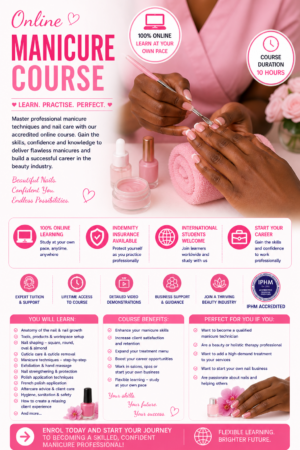
Manicure Online Course – IPHM Accredited
£129.00Online Manicure Course. Master the art of the manicure technique from the comfort of your own home. This online manicure...Add to basket -
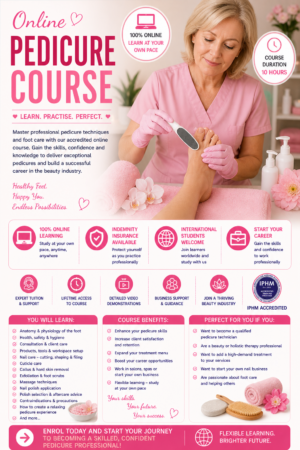
Pedicure Online Course – IPHM Accredited
£129.00Online Pedicure Course. The course will teach learners how to offer pedicure treatments for friends, family and paying clients. Whether you...Add to basket -
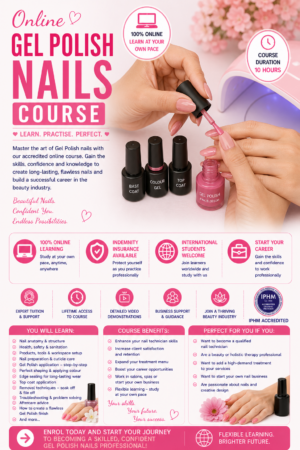
Gel Polish Online Course – IPHM Accredited
From £129.00This online Gel Polish online course is aimed at anyone looking to learn this new technique to become their own...View Course Details This product has multiple variants. The options may be chosen on the product page -
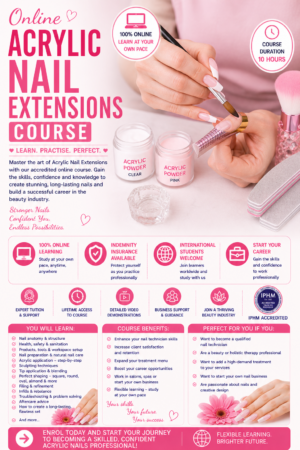
Acrylic Nail Extensions Online Course – IPHM Accredited
From £129.00Online Acrylic Nails Course. Acrylic nails are a type of artificial nail enhancement made from a combination of liquid monomer...View Course Details This product has multiple variants. The options may be chosen on the product page
View our Nail Technician FAQ's Below!
Gel nails are a popular type of artificial nails that are created using a gel-based product. They offer a durable, glossy finish that can last longer than traditional nail polish. Here’s a detailed look at gel nails:
### Types of Gel Nails
1. **Soft Gel (Soak-Off Gel):**
– Used primarily for gel polish manicures.
– Soaked off using acetone.
– Commonly applied as a polish and cured under a UV or LED light.
– Popular brands include Gelish, Shellac, and OPI GelColor.
2. **Hard Gel (Builder Gel):**
– Used to create nail extensions or overlays.
– Cannot be soaked off with acetone; must be filed off.
– More durable than soft gel and can be used to build the nail structure.
– Provides a strong, lightweight, and natural-looking finish.
### Application Process
1. **Preparation:**
– Nails are cleaned, shaped, and buffed.
– Cuticles are pushed back or trimmed.
2. **Base Coat:**
– A base coat is applied to protect the natural nail and provide adhesion.
– Cured under a UV or LED light.
3. **Gel Polish Application:**
– Gel polish (color) is applied in thin layers.
– Each layer is cured under a UV or LED light to harden the gel.
– Typically, 2-3 coats are applied for full opacity and color depth.
4. **Top Coat:**
– A top coat is applied to seal the color and add shine.
– Cured under a UV or LED light.
5. **Finishing:**
– A sticky residue (inhibition layer) is often removed with a cleanser.
– Nails are often massaged with cuticle oil for hydration.
### Benefits
– **Long-Lasting:** Gel nails can last up to 2-3 weeks without chipping or peeling.
– **High Shine:** They offer a glossy finish that lasts until the nails are removed.
– **Durability:** They are more durable than traditional nail polish.
– **Quick Drying:** Gel nails dry quickly under a UV or LED light, reducing the risk of smudging.
### Removal
– **Soft Gel:** Soaked in acetone or wrapped in acetone-soaked cotton and aluminum foil for about 10-15 minutes, then gently pushed off.
– **Hard Gel:** Filed off using a nail file or electric drill, as they cannot be soaked off.
### Considerations
– **UV Exposure:** Repeated exposure to UV light can have long-term skin effects, though LED lamps are a safer alternative.
– **Nail Health:** Improper removal can damage natural nails, making them weak or brittle.
– **Maintenance:** Regular fills and touch-ups may be required to maintain the look as nails grow.
Gel nails are a versatile and long-lasting option for those seeking durable and aesthetically pleasing nails. Proper application and removal are key to maintaining healthy natural nails.
Acrylic nails are a type of artificial nail enhancement made from a combination of liquid monomer and powdered polymer. When these two substances are combined, they create a hard protective layer over the natural nails that can be shaped and styled. Here’s a detailed look at acrylic nails:
### Application Process
1. **Preparation:**
– Nails are cleaned, shaped, and buffed.
– Cuticles are pushed back or trimmed.
2. **Nail Tips or Forms:**
– If extensions are desired, nail tips are glued to the natural nails.
– Alternatively, forms (templates) can be used to sculpt the acrylic over the natural nail.
3. **Acrylic Application:**
– A brush is dipped into the liquid monomer and then into the powdered polymer to form a bead.
– The bead is applied to the natural nail or nail tip and shaped as desired.
– This process is repeated until the desired length and thickness are achieved.
4. **Shaping and Buffing:**
– Once the acrylic hardens, it is filed and buffed to the desired shape and smoothness.
– This can be done using a nail file or an electric drill.
5. **Finishing:**
– The nails can be left natural, polished, or further decorated with nail art, gel polish, or regular nail polish.
### Benefits
– **Durability:** Acrylic nails are strong and can withstand more wear and tear than natural nails.
– **Versatility:** They can be shaped and styled into various designs, lengths, and forms.
– **Length:** Acrylics can add significant length to natural nails, making them ideal for those with shorter nails.
– **Customizability:** They can be customized with different colors, shapes, and nail art.
### Maintenance
– **Fills:** As the natural nail grows, a gap can appear between the acrylic and the cuticle. Regular fills (usually every 2-3 weeks) are necessary to maintain the appearance and strength of the nails.
– **Repairs:** If an acrylic nail cracks or lifts, it needs to be repaired to prevent damage to the natural nail underneath.
### Removal
– **Soaking in Acetone:** Acrylic nails can be removed by soaking them in acetone for about 15-20 minutes until they soften. The softened acrylic is then gently pushed off with a nail tool.
– **Filing Off:** Acrylic can also be filed off using a nail file or electric drill, though this requires careful technique to avoid damaging the natural nail.
### Considerations
– **Nail Health:** Prolonged use of acrylic nails can weaken the natural nails, making them brittle and prone to damage.
– **Maintenance:** Regular upkeep is necessary to keep acrylic nails looking good and to prevent lifting or breaking.
– **Professional Application:** It’s recommended to have acrylic nails applied and removed by a professional to avoid potential damage to the natural nails.
– **Chemical Exposure:** The chemicals used in acrylic nails, particularly the liquid monomer, have a strong odor and can cause allergic reactions in some people.
Acrylic nails are a popular choice for those seeking durable, long-lasting, and customizable nail enhancements. Proper application, maintenance, and removal are crucial to maintaining the health of the natural nails underneath.
“Builder in a Bottle” is a type of nail enhancement product designed for building and strengthening nails. It’s a gel-based product that comes in a bottle with a brush applicator, similar to nail polish. Here’s a detailed explanation:
### What is Builder in a Bottle ?
1. **Gel Formula:**
– BIAB is a thick, builder gel that is applied directly from a bottle, making it convenient and easy to use.
– It’s designed to provide strength and structure to the natural nails, allowing for the creation of extensions or overlays.
2. **Application:**
– **Preparation:** Nails are cleaned, shaped, and buffed. Cuticles are pushed back or trimmed.
– **Base Coat:** A base coat may be applied and cured under a UV or LED lamp.
– **Builder Gel Application:** The nail is applied in layers, each layer being cured under a UV or LED lamp. The gel is built up to the desired thickness and shape.
– **Shaping and Buffing:** Once the gel is fully cured, the nails are filed and buffed to the desired shape and smoothness.
– **Finishing:** A top coat is applied and cured, and any sticky residue is removed with a cleanser.
3. **Benefits:**
– **Ease of Use:** The brush applicator allows for precise and controlled application, making it user-friendly even for those who are not professional nail technicians.
– **Strength:** Builder in a bottle provides strong support for natural nails, helping to prevent breakage and promoting nail growth.
– **Versatility:** It can be used for overlays on natural nails or for creating nail extensions with forms or tips.
– **Durability:** The gel provides a long-lasting finish that is less prone to chipping compared to traditional nail polish.
4. **Removal:**
– **Soaking in Acetone:** Similar to other gel products, Nails can be soaked off using acetone. This process typically involves wrapping the nails in acetone-soaked cotton and aluminum foil.
– **Filing:** Alternatively, the product can be carefully filed off.
5. **Considerations:**
– **Proper Curing:** Ensuring each layer is properly cured under the UV or LED lamp is crucial to avoid lifting or peeling.
– **Professional Application:** While it is designed for ease of use, having nails applied by a professional can ensure the best results and minimise the risk of damage to the natural nails.
– **Maintenance:** Like other nail enhancements, regular fills and maintenance are needed to keep the nails looking their best.
Builder in a Bottle is a convenient and effective product for those looking to strengthen their natural nails or create extensions, combining the benefits of traditional builder gels with the ease of application of a gel polish.
A nail technician, also known as a manicurist or pedicurist, is a professional who specialises in the care and beautification of clients’ fingernails and toenails. Their primary responsibilities include:
1. **Manicures and Pedicures:** Nail technicians perform manicures (care and treatment of the hands and fingernails) and pedicures (care and treatment of the feet and toenails). This involves cleaning, trimming, shaping, and polishing nails.
2. **Nail Art:** They often apply decorative designs or art on nails, which can range from simple polish to intricate designs using various tools and materials.
3. **Artificial Nails:** Nail technicians apply artificial nails, such as acrylic or gel nails, and provide maintenance for these enhancements, including fills and repairs.
4. **Nail Treatments:** They offer treatments to improve the health and appearance of nails, such as cuticle care, exfoliation, and moisturising treatments.
5. **Sanitation and Hygiene:** Maintaining a clean and sanitary work environment is crucial. This includes sterilizing tools and ensuring the workspace is free from contamination.
6. **Client Consultation:** They assess clients’ needs, provide recommendations for nail care, and advise on products that can be used at home for nail maintenance.
7. **Product Knowledge:** Staying informed about the latest nail products, trends, and techniques in the industry is important for providing the best service.
To become a nail technician, one typically needs to complete an accredited qualification or course, obtain liability insurance (requirements vary by region), and keep up with continuing education to stay updated on industry standards and trends.
Yes, nail technicians should have liability insurance. This type of insurance is important for several reasons:
### Types of Liability Insurance for Nail Technicians
1. **General Liability Insurance:**
– **Coverage:** Protects against third-party claims of bodily injury, property damage, and personal injury (e.g., slander or libel).
– **Examples:** If a client slips and falls in the salon or if a technician accidentally damages a client’s property.
2. **Professional Liability Insurance (also known as Errors and Omissions Insurance):**
– **Coverage:** Protects against claims related to the professional services provided by the technician, such as mistakes, negligence, or failure to deliver the promised services.
– **Examples:** If a client has an allergic reaction to a product used or if a manicure or pedicure leads to an infection.
3. **Product Liability Insurance:**
– **Coverage:** Protects against claims arising from products sold or used during services.
– **Examples:** If a product used during a nail service causes harm to a client.
### Reasons for Having Liability Insurance
1. **Legal Requirements:**
– In some regions or states, having liability insurance may be a legal requirement for operating as a licensed nail technician or salon.
2. **Financial Protection:**
– Liability insurance helps cover legal fees, medical expenses, and damages that may result from a lawsuit, which can be financially devastating without insurance.
3. **Professionalism:**
– Having liability insurance demonstrates professionalism and a commitment to the safety and well-being of clients, which can enhance the technician’s reputation and client trust.
4. **Peace of Mind:**
– Insurance provides peace of mind, allowing nail technicians to focus on their work without constantly worrying about the potential financial repercussions of accidents or mistakes.
### Considerations When Choosing Insurance
– **Coverage Limits:** Ensure the policy provides adequate coverage for potential risks.
– **Policy Exclusions:** Understand what is and isn’t covered by the policy.
– **Cost:** Compare premiums and coverage options from different insurers to find the best fit.
– **Reputation of the Insurer:** Choose a reputable insurance provider with good customer service and claims handling.
In summary, liability insurance is a crucial safeguard for nail technicians, protecting them from potential legal and financial consequences arising from their professional activities.
This will depend on many factors. Commitment, previous knowledge and type of course you take. Some of the courses can be done within a few days. To cover them all could take a few weeks, even months. You have lifetime access to your course so you can study to suit without pressure or restriction.
The International Practitioners of Holistic Medicine (IPHM) is an organization that provides accreditation for holistic and complementary therapists, practitioners, and training providers. Here’s a detailed look at what the IPHM is and what it offers:
### What is IPHM?
1. **Accreditation Body:**
– IPHM is a global accreditation board that ensures holistic and complementary therapy practitioners and training providers meet high standards of practice.
2. **Holistic and Complementary Therapies:**
– The organization focuses on a wide range of holistic therapies, including but not limited to, massage therapy, aromatherapy, reflexology, and various forms of energy healing.
### Services and Benefits
1. **Accreditation for Practitioners:**
– **Professional Recognition:** Practitioners who meet IPHM’s standards can receive accreditation, which can enhance their professional credibility and trustworthiness in the eyes of clients.
– **Global Reach:** IPHM accreditation is recognized internationally, which can be beneficial for practitioners working with a diverse clientele or those who travel frequently.
2. **Accreditation for Training Providers:**
– **Course Approval:** Training providers can have their courses and programs accredited by IPHM, assuring potential students of the quality and reliability of their training.
– **Marketing Benefits:** Accredited training providers can use the IPHM logo in their marketing materials, helping to attract more students by highlighting their professional endorsement.
3. **Membership Benefits:**
– **Support and Resources:** Members receive ongoing support, resources, and updates from IPHM, including access to workshops, webinars, and other professional development opportunities.
– **Networking Opportunities:** IPHM offers networking opportunities with other practitioners and professionals within the holistic and complementary therapy fields.
– **Insurance Discounts:** Members may be eligible for discounts on professional liability insurance and other related services.
4. **Directory Listing:**
– **Visibility:** Accredited practitioners and training providers can be listed in the IPHM’s online directory, making it easier for potential clients and students to find and connect with them.
### Accreditation Process
1. **Application:**
– Practitioners and training providers must submit an application that details their qualifications, experience, and the services or courses they offer.
2. **Assessment:**
– IPHM reviews the application to ensure that the applicant meets their standards for practice or education. This may include evaluating credentials, experience, and the quality of the training programs offered.
3. **Approval:**
– Once the application is approved, the practitioner or training provider receives their accreditation and can begin to use the IPHM’s logo and other membership benefits.
### Importance of IPHM Accreditation
– **Trust and Credibility:** IPHM accreditation provides a mark of quality and professionalism, helping practitioners and training providers to build trust with clients and students.
– **Professional Development:** Members benefit from ongoing education and networking opportunities, helping them to stay current with industry trends and best practices.
– **Global Recognition:** IPHM’s international reach helps practitioners and training providers to appeal to a broader audience, enhancing their professional opportunities and visibility.
In summary, the IPHM plays a crucial role in the holistic and complementary therapy fields by providing accreditation that assures clients and students of the quality and professionalism of practitioners and training providers.
The fees charged by nail technicians in the UK can vary widely based on several factors, including the location of the salon, the experience and reputation of the technician, the complexity of the service, and the type of nail enhancements offered. Here’s a general overview of what nail technicians might charge for various services in the UK:
### Basic Services
1. **Manicure:**
– A basic manicure in the UK can typically range from £20 to £40.
– This usually includes nail shaping, cuticle care, hand massage, and polish application.
2. **Pedicure:**
– Basic pedicure prices can vary from £25 to £50.
– This typically involves nail trimming, cuticle care, foot exfoliation, massage, and polish application.
### Nail Enhancements
1. **Acrylic Nails:**
– Prices for a full set of acrylic nails in the UK can range from £30 to £60 or more.
– This includes the application of acrylic extensions and shaping.
2. **Gel Nails:**
– Gel polish manicures in the UK usually range from £25 to £45.
– This includes the application of gel polish, curing under a UV or LED lamp, and cuticle care.
3. **Nail Art:**
– Prices for nail art designs can vary widely depending on complexity and the time required.
– Simple designs might start around £5 per nail, while more intricate designs could cost £10 or more per nail.
### Additional Services
1. **Nail Repair:**
– Nail repair services might be charged per nail, typically ranging from £5 to £10 per nail.
2. **Removal Services:**
– Charges for removing acrylic or gel nails can range from £10 to £20, depending on whether it’s a soak-off or filed removal.
### Factors Affecting Pricing
– **Location:** Salons in larger cities or affluent areas might charge higher prices compared to smaller towns or rural areas.
– **Experience:** Experienced technicians or those with specialized training may charge higher fees.
– **Quality of Products:** Salons using high-quality products may charge more than those using budget-friendly options.
– **Demand:** Popular salons with high demand for services may have higher prices due to their reputation and client base.
### Setting Prices
– **Market Research:** It’s important for nail technicians to research local market rates to remain competitive while reflecting their skill level and service quality.
– **Value Proposition:** Establishing a reputation for excellent service, hygiene, and professionalism can justify higher prices.
Overall, the pricing for nail services in the UK can vary significantly depending on several factors, but the ranges provided above should give a good indication of what customers might expect to pay for different nail treatments and enhancements.